The 7th Muslims in ML Workshop at NeurIPS 2026
The 7th Muslims in ML (MusIML) Workshop continues its tradition of success at top-tier conferences, providing a vibrant academic and social platform for the global Muslim community in machine learning. This workshop directly responds to NeurIPS's call for Affinity Groups, focusing on the intersection of machine learning, fairness, and the global Muslim community to explore its unique challenges and opportunities. Our core objective is to foster high-quality original research, promote ethical AI solutions tailored to diverse cultural, linguistic, and economic contexts, and create an inclusive and safe academic space for Muslim researchers. The MusIML community has an extensive track record of organizing successful events at premier conferences. Since 2020, we have organized 12 official events, including 6 workshops and 7 social and mentoring events. Our workshops have become a staple affinity event at both NeurIPS and NeurIPS. The community has shown consistent growth, from approximately 100 attendees at our inaugural workshop at NeurIPS 2020 to accepting 60 papers with 300+ attendees at NeurIPS 2025, demonstrating our expanding influence and the increasing engagement of our community. The 7th Muslims in ML workshop will be held in Sydney, co-located with NeurIPS 2026.
Our Goals
The Muslims in ML Workshop aims to:
- Build a global network of Muslim researchers and professionals in ML.
- Promote research that addresses biases and challenges faced by Muslim communities.
- Provide mentorship and networking opportunities for researchers, particularly from Muslim-majority countries.
- Create space for discussions on ethical AI, inclusivity, and decolonizing AI research.
Our Mission and Vision
The MusIML workshop seeks to provide a platform for the machine learning community to engage in thoughtful discussions about the impact of artificial intelligence (AI) and machine learning (ML) technologies on Muslim individuals and communities. Our goal is to highlight both the opportunities for advancement and the risks of harm to those who identify with, are culturally connected to, or are categorized as Muslim. We aim to foster an inclusive environment where issues related to bias, ethical concerns, and representation in AI and ML can be addressed through research, collaboration, and advocacy. By bringing together academics, professionals, and practitioners, we strive to ensure that the benefits of ML extend equitably to Muslim communities while minimizing potential harms.
Our vision is to create a more equitable and just future where AI and ML technologies work to uplift Muslim communities, reduce societal biases, and foster innovation that respects and values cultural, religious, and ethical differences. We envision a world where Muslims and those in Muslim-majority regions are empowered to contribute to and benefit from advancements in machine learning. Through ongoing discussions, research, and collaborations, we aspire to create positive change by addressing systemic challenges in technology, enhancing inclusion, and advocating for fair representation of Muslims in the ML field.
Call for Papers: MusiML@NeurIPS2026
We are pleased to announce the 7th Muslims in Machine Learning (MusIML) Workshop, which will take place at NeurIPS 2026, in Sydney, Australia. This workshop aims to amplify the development and use of machine learning (ML) in Muslim communities including Muslim-majority countries and strategies for global societal impact through AI and ML.
Workshop Overview
The MusIML workshop serves as a platform for researchers and practitioners to explore the intersection of machine learning, AI, and Muslim communities. Our mission is to promote high-quality research that not only fosters growth within Muslim communities but also advances strategies to improve fairness, inclusion, and ethical AI. We encourage contributions that address these challenges and highlight how ML can be a tool for positive change, especially for Muslims in both Muslim-majority countries and global communities.
Track 1: ML for Muslim Communities and Islamic Contexts
Research on Quran and Hadith analysis, Islamic digital humanities, language and speech technologies, education, healthcare, governance, datasets, fairness, representation, and other challenges relevant to Muslim communities.
Length: 4 pages for short papers or 8 pages for long papers.
Criteria: Community relevance, technical quality, sound evaluation, originality, impact, and clarity.
Track 2: AI System Demonstrations for Muslim Communities and Islamic Contexts
Working AI systems addressing Islamic contexts or the needs of Muslim communities, including research prototypes, open-source tools, educational platforms, scientific software, agentic systems, and deployed applications.
Submissions must include:
- A 2-page short or 4-page long demonstration paper
- An anonymized, AI-narrated 3-5 minute demonstration video
- Evaluation or comparison with relevant existing systems
- A live demonstration for accepted submissions
Criteria: Community relevance, technical quality, innovation, user value, comparative evaluation, deployment potential, and demonstration quality.
Track 3: ML Competition Proposals for Social Impact
Competition proposals addressing challenges relevant to Muslim communities, including Quran and Hadith technologies, culturally aware NLP, healthcare, education, accessibility, public services, and responsible AI.
Submissions must include:
- A ready-to-use dataset
- A 10% dataset sample for review
- Clearly defined evaluation metrics
- Evaluated baseline results
Length: Maximum 2 pages.
Criteria: Social impact, task design, dataset readiness and quality, baseline evaluation, feasibility, ethics, and participation potential.
Track 4: Mentored Research and Networking
This track includes two submission categories:
- Mentored Research Papers: Research conducted through the Ibtikar × Muslims in ML program or Fatima Fellowship mentorship, with the mentee as first author. Length: 4 pages for short papers or 8 pages for long papers.
- Accepted-Paper Extended Abstracts: A summary of work already accepted at a major AI conference, submitted for presentation and networking. Length: Maximum 2 pages. These submissions are exceptionally non-anonymous and must identify the original conference and accepted paper.
Criteria: Technical quality, contribution, clarity, mentorship outcomes, and networking value.
Track 5: ML Research by Muslim Scholars
Any ML/AI topic, including LLMs, generative AI, vision, speech, probabilistic methods, federated learning, robotics, and AI ethics and safety. At least one author self-identifies as Muslim. Papers submitted to the NeurIPS main conference are also welcome here.
Length: 4 pages (short) or 8 pages (long).
Important Dates
- Call for Contributions: July 15, 2026
- Visa-Friendly Submission Deadline: August 10, 2026
- Visa-Friendly Notification: August 20, 2026
- Final Submission Deadline: September 10, 2026
- Final Notification: September 20, 2026
- Camera-Ready Submission: November 10, 2026
Program Details
Registration
The NeurIPS workshop registration, as listed on neurips.cc, would be needed. Coverage of the registration fee for the NeurIPS workshops or conference may be offered for one author of an accepted paper based on availability .
Tentative Schedule
- 10:00 - 10:15 AM: Registration
- 10:15 - 10:30 AM: Opening Remarks
- 10:30 - 11:00 AM: Invited Talk 1
- 11:00 - 11:30 AM: Invited Talk 2
- 11:30 - 12:00 PM: Oral Presentation (selected high-quality papers)
- 12:00 - 1:30 PM: Lunch Break & Internal Poster Session 1
- 1:30 - 2:00 PM: Invited Talk 3
- 2:00 - 2:30 PM: Invited Talk 4
- 2:30 - 2:45 PM: Industry Partner Talk
- 2:45 - 3:30 PM: Expert-Led Mentoring Roundtables and Social Mixer
- 3:30 - 4:00 PM: Coffee Break & Internal Poster Session 2
- 4:00 - 4:45 PM: Panel: AI and the Future of Society: Safety, Industry, and Global Equity
- 4:45 - 5:00 PM: Closing & Awards
Organizing Team
 Shaokai Yang
University of Alberta
Shaokai Yang
University of Alberta
 Ahmed Youssef
Synopsys
Ahmed Youssef
Synopsys
 Ehsaneddin Asgari
Qatar Computing Research Institute
Ehsaneddin Asgari
Qatar Computing Research Institute
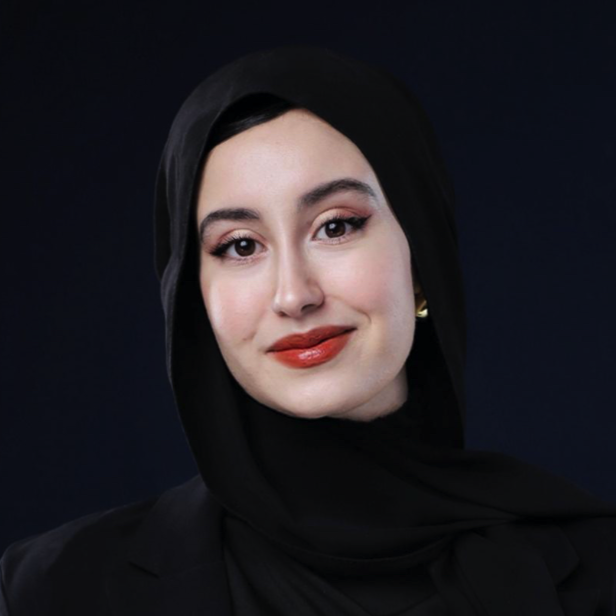 Yousra Farhani
Niels Bohr Institute
Yousra Farhani
Niels Bohr Institute
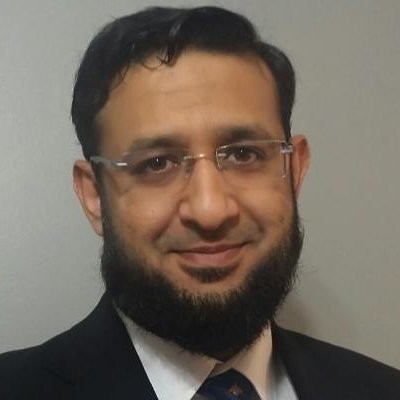 Suleiman Ali Khan
Amazon
Suleiman Ali Khan
Amazon
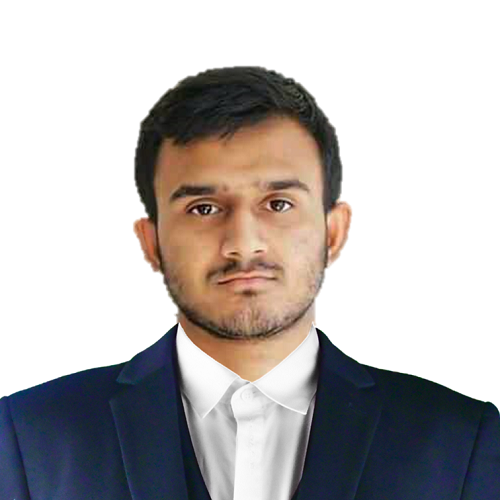 Azmine Toushik Wasi
CIOL
Azmine Toushik Wasi
CIOL
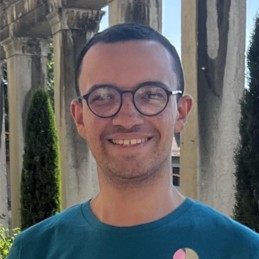 Gasser Elbanna
Harvard University
Gasser Elbanna
Harvard University
 Nasik Muhammad Nafi
Oak Ridge National Lab
Nasik Muhammad Nafi
Oak Ridge National Lab
 Kamran Soomro
UWE Bristol
Kamran Soomro
UWE Bristol
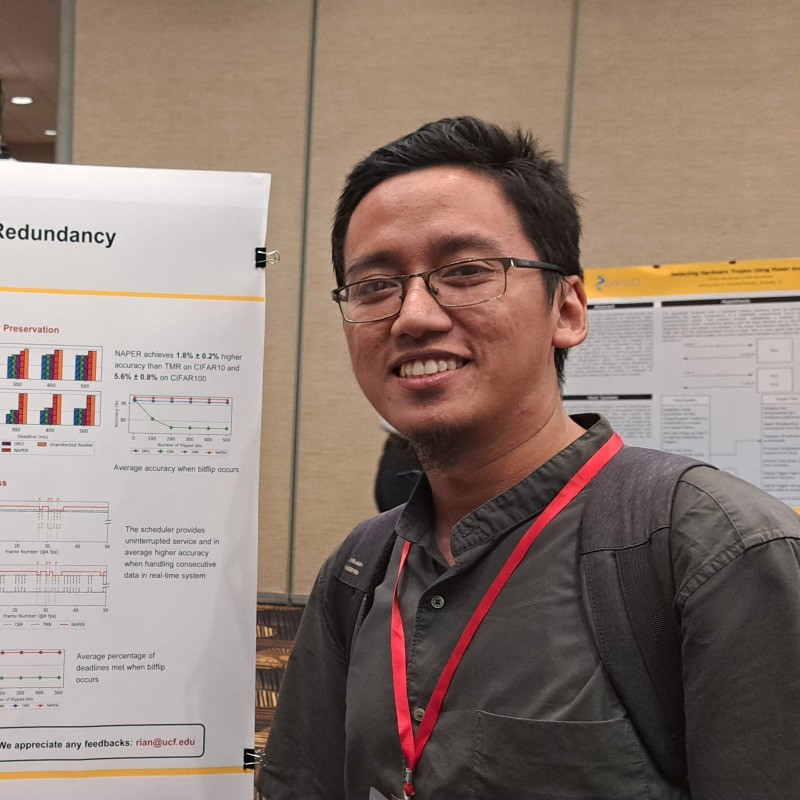 Rian Adam Rajagede
University of Central Florida
Rian Adam Rajagede
University of Central Florida
 Muhammad Irfan Khan
Turku University of Applied Sciences
Muhammad Irfan Khan
Turku University of Applied Sciences
Join Us
We welcome all researchers— irrespective of their religious/ethnic background —to submit their work and contribute to the development and application of ML in Muslims Countries and Muslim Communities globally. For more information, please visit our community page. For any questions, email the organizers at: [email protected]. Also, sign up to [email protected] mailing list by filling out the form to follow updates about our workshop. Also, join Muslims in ML Slack group.