
The 6th Muslims in ML Workshop at ICML 2026
The 6th Muslims in ML (MusIML) Workshop continues its tradition of success at top-tier conferences, providing a vibrant academic and social platform for the global Muslim community in machine learning. This workshop directly responds to ICML's call for Affinity Groups, focusing on the intersection of machine learning, fairness, and the global Muslim community to explore its unique challenges and opportunities. Our core objective is to foster high-quality original research, promote ethical AI solutions tailored to diverse cultural, linguistic, and economic contexts, and create an inclusive and safe academic space for Muslim researchers. The MusIML community has an extensive track record of organizing successful events at premier conferences. Since 2020, we have organized 10 official events, including 5 workshops and 5 social and mentoring events. Our workshops have become a staple affinity event at both NeurIPS and ICML. The community has shown consistent growth, from approximately 100 attendees at our inaugural workshop at NeurIPS 2020 to accepting 60 papers with 300+ attendees at NeurIPS 2025, demonstrating our expanding influence and the increasing engagement of our community. The 6th Muslims in ML workshop is held in July 9, 2026, co-located with ICML 2026, at Room S300, COEX, Seoul, South Korea.
All accepted papers are available in OpenReview publicly. Check here: [OpenReview: Accepted Papers in ICML 2026 Workshop]
Our Goals
The Muslims in ML Workshop aims to:
- Build a global network of Muslim researchers and professionals in ML.
- Promote research that addresses biases and challenges faced by Muslim communities.
- Provide mentorship and networking opportunities for researchers, particularly from Muslim-majority countries.
- Create space for discussions on ethical AI, inclusivity, and decolonizing AI research.
Our Mission and Vision
The MusIML workshop seeks to provide a platform for the machine learning community to engage in thoughtful discussions about the impact of artificial intelligence (AI) and machine learning (ML) technologies on Muslim individuals and communities. Our goal is to highlight both the opportunities for advancement and the risks of harm to those who identify with, are culturally connected to, or are categorized as Muslim. We aim to foster an inclusive environment where issues related to bias, ethical concerns, and representation in AI and ML can be addressed through research, collaboration, and advocacy. By bringing together academics, professionals, and practitioners, we strive to ensure that the benefits of ML extend equitably to Muslim communities while minimizing potential harms.
Our vision is to create a more equitable and just future where AI and ML technologies work to uplift Muslim communities, reduce societal biases, and foster innovation that respects and values cultural, religious, and ethical differences. We envision a world where Muslims and those in Muslim-majority regions are empowered to contribute to and benefit from advancements in machine learning. Through ongoing discussions, research, and collaborations, we aspire to create positive change by addressing systemic challenges in technology, enhancing inclusion, and advocating for fair representation of Muslims in the ML field.
Call for Papers: MusiML@ICML2026
We are pleased to announce the 6th Muslims in Machine Learning (MusIML) Workshop, which will take place at ICML 2026, in Seoul, South Korea. This workshop aims to amplify the development and use of machine learning (ML) in Muslim communities including Muslim-majority countries and strategies for global societal impact through AI and ML.
Workshop Overview
The MusIML workshop serves as a platform for researchers and practitioners to explore the intersection of machine learning, AI, and Muslim communities. Our mission is to promote high-quality research that not only fosters growth within Muslim communities but also advances strategies to improve fairness, inclusion, and ethical AI. We encourage contributions that address these challenges and highlight how ML can be a tool for positive change, especially for Muslims in both Muslim-majority countries and global communities.
Workshop Tracks
Track 1: ML research addressing challenges faced by Muslim communities and research related to Islamic contexts
This track is open to all researchers, regardless of religious or ethnic background, and encourages submissions that promote the use of ML to support and empower Muslim communities globally, including in Muslim-majority countries. Published and/or In-progress work is welcome. Areas of interest include but are not limited to:
- Growth of Muslims in ML: Initiatives that expand educational and professional opportunities for Muslims in ML, promote access, and encourage representation in the field.
- ML for Social Good: Using ML/AI to engage Muslim youth, promote community outreach, enhance societal well-being, and improve governance, healthcare, or education in Muslim communities.
- Language and Speech Technologies: Advancements in tools for languages spoken in Muslim communities, such as Arabic, Urdu, and Persian.
- Computational Analysis of Islamic Scriptures: Digital humanities research, including computational studies of Hadith or Quranic texts.
- Data Collection and Representation: Rich datasets from diverse Muslim communities.
- Mitigating Algorithmic Bias and Discrimination: Research exploring strategies that mitigate algorithmic bias and related topics that impact Muslim individuals and communities.
Track 2: Machine learning research by Muslim authors
This track invites submissions from researchers who self-identify as Muslim. Published and/or In-progress work is welcome. We encourage work that explores the frontiers of machine learning and AI, including but not limited to:
- LLMs, MLLMs, Generative AI: Research focused on large language models, generative AI systems, cutting-edge vision models, self-supervised learning, and advancements in multilingual capabilities, especially for languages spoken by Muslim communities.
- Applications of ML: In vision, language, speech, and audio.
- Machine Learning for Society: For example, in education, health, climate, and social sciences.
- Probabilistic Methods: Deep learning, reinforcement learning, and optimization.
- Social and Economic Aspects of ML: Fairness, interpretability, human-AI interaction, privacy, safety, and strategic behavior.
- Federated Learning and AI-driven Innovations: For healthcare and smart cities and public services such as governance, energy, and traffic management.
- Evaluation Methodologies and Scalable Infrastructures
- Robotics and NeuroAI: Including research at the intersection of neuroscience, AI, and cognitive science.
- AI Ethics and Safety: Data privacy, interpretable AI, green AI, red teaming in AI, etc.
Track 3: Machine learning competition proposals for social impact in Muslim communities
This track invites proposals for machine learning competitions that address challenges relevant to Muslim communities worldwide. Submissions should outline a competition concept that promotes fairness, inclusivity, and responsible AI, and may focus on areas such as equitable healthcare access, culturally aware NLP tasks, or AI for social good in Muslim-majority regions.
Submission Guidelines
Tracks 1 and 2
We invite submissions of short papers (up to four pages) including all figures and tables but excluding references in PDF format. An optional appendix can be included. The appendix will not be considered in the review process. Papers may have been previously published or be under review elsewhere. To prepare your submission for Track 1 and 2, please use the LaTeX style files for ICML 2026: ICML 2026 LaTeX style file. All submissions must follow ICML Author Guidelines. Submissions must be anonymized, please refrain from including personally identifiable information. Submissions will be reviewed in a double-blind setting. All Track 1 and 2 submissions will be peer-reviewed through OpenReview (https://openreview.net/group?id=ICML.cc/2026/Workshop/MusIML).
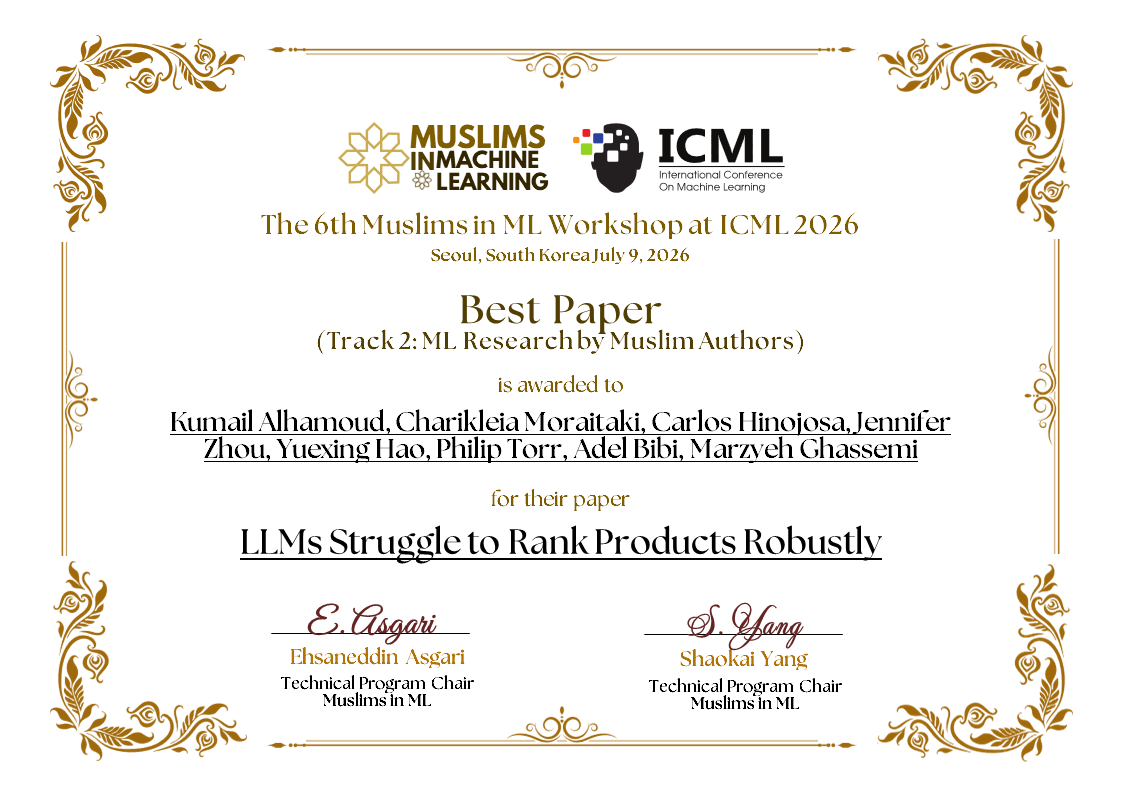
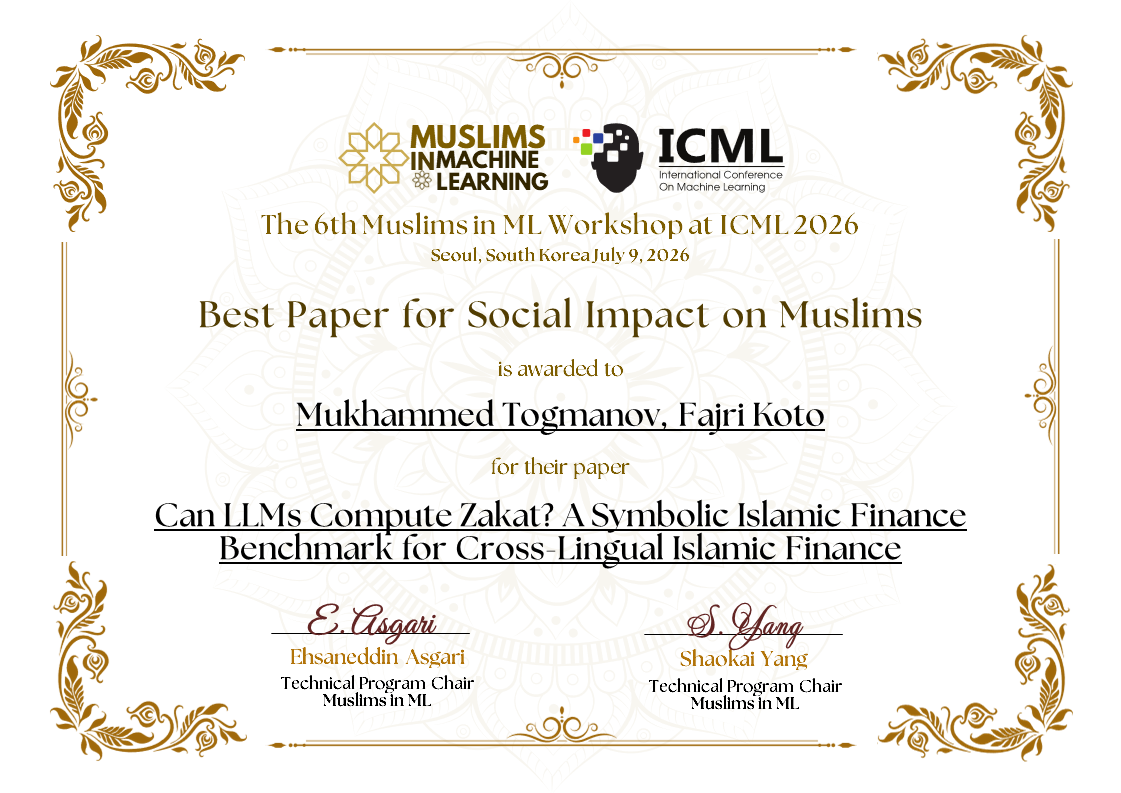
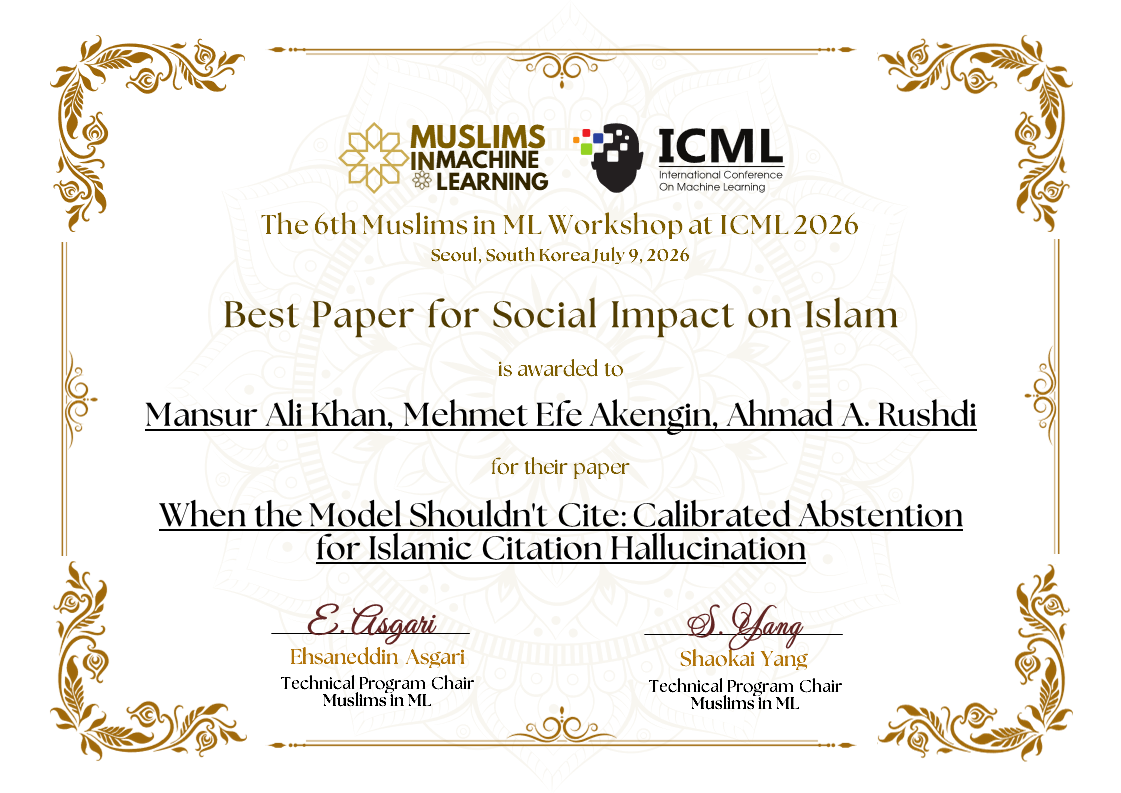
Accepted papers will be showcased in a poster session, and selected authors will present lightning talks. Participants will also have the chance to contribute in a joint poster session with other ICML affinity groups. Best Paper Awards will be given to the papers that show technical depth and societal impact.
Track 3
Competition proposals must describe the problem statement, dataset considerations (including ethical sourcing), evaluation criteria, and potential positive impact. Selected competitions may be featured as part of the workshop program or developed in collaboration with MusIML partners following NeurIPS. Here are some guidelines for the competition proposal: MusiML-SharedTask Template. Please make a copy and work on that. All Track 3 submissions should be submitted through OpenReview, selecting the track while submitting.
Important Dates
- Initiate call for papers: March 20, 2026 (AOE)
- Submission deadline:
May 10, 2026 (AOE)(Extended to May 25, 2026 (AOE)) - Notification of decision: May 31, 2026 (AOE)
- Camera Ready submission: June 21, 2026 (AOE)
- Video submission: June 24, 2026 (AOE)
- Workshop: July 9, 2026
Program Details
Registration
The ICML workshop registration, as listed on icml.cc, would be needed. Coverage of the registration fee for the ICML workshops or conference may be offered for one author of an accepted paper based on availability .
All accepted papers are available in OpenReview publicly. Check here: [OpenReview: Accepted Papers in ICML 2026 Workshop]
Schedule
Our workshop will host a mix of invited talks, contributed posters, and discussion sessions (tentative schedule below).
Timezone: Asia/Seoul
-
9:30 a.m.
Registration
Registration
-
10:00 a.m.
Opening Remarks
Ehsaneddin AsgariOpening Remarks
-
10:15 a.m.
Causal Representation Learning, Causal Generative AI, and Beyond
Prof. Kun Zhang (MBZUAI)Invited Talk
-
10:45 a.m.
AI for Social Good: Advancing Autism Detection through Multi-Modal Emotion Estimation
Prof. Aznul Sabri (Universiti Malaya)Invited Talk
-
11:15 a.m.
Process-Oriented Creativity Assessment
Ms. Yan Sha (University of Alberta)Oral Presentation
-
11:25 a.m.
Not Neurotic Enough!: Behavioural Asymmetry Across Activation Interventions for Big Five Personality Control in LLMs
Ms. Hala Sheta (University of Waterloo)Oral Presentation
-
11:35 a.m.
Shift Happens: Robustness and Reliability of Multimodal Foundation Models
Naman Goyal (Google DeepMind) and Jenny Ni (Google)Invited Talk
-
12:00 p.m.
Lunch Break (Google Table)
Break
-
1:30 p.m.
Crowd Navigation for Mobile Robots with Focused Risk Perception
Mr. Hafiq Anas (Universiti Brunei Darussalam)Oral Presentation
-
1:40 p.m.
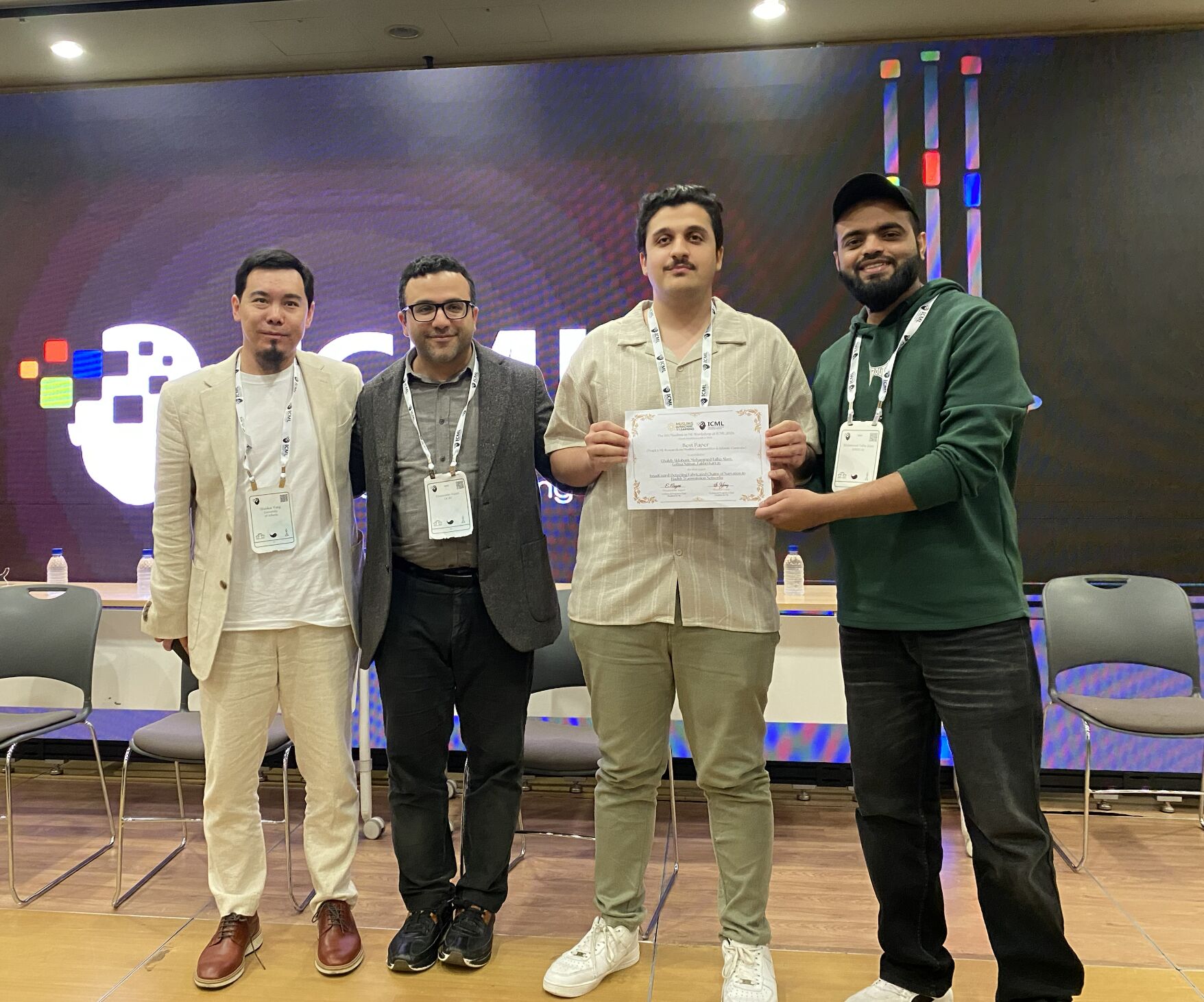
IsnadGuard: Detecting Fabricated Chains of Narration in Hadith Transmission Networks
Mr. Ghaleb Aldoboni (MBZUAI)Oral Presentation
-
1:50 p.m.
Rescaling Asynchronous Stochastic Gradient Descent for Optimal Performance
Mr. Ammar Mahran (KAUST)Oral Presentation
-
2:00 p.m.
When the Model Shouldn't Cite: Calibrated Abstention for Islamic Citation Hallucination
Dr. Ahmad Rushdi (Stanford University)Oral Presentation
-
2:10 p.m.
LLMs Struggle to Rank Products Robustly
Mr. Kumail Alhamoud (MIT)Oral Presentation
-
2:30 p.m.
Quantum Machine Learning: What ML Researchers Need to Know
Ms. Yousra Farhani (Niels Bohr Institute)Invited Talk
-
3:45 p.m.
LLMs are aligned - but with whom?
Ms. Pardis Sadat Zahraei (UIUC)Invited Talk
-
4:15 p.m.
Panel: AI and the Future of Society: Safety, Industry, and Global Equity
Mansur Ali KhanPanel
-
5:00 p.m.
Award and Closing
Shaokai YangAwards and Closing
Invited Speakers


Gallery
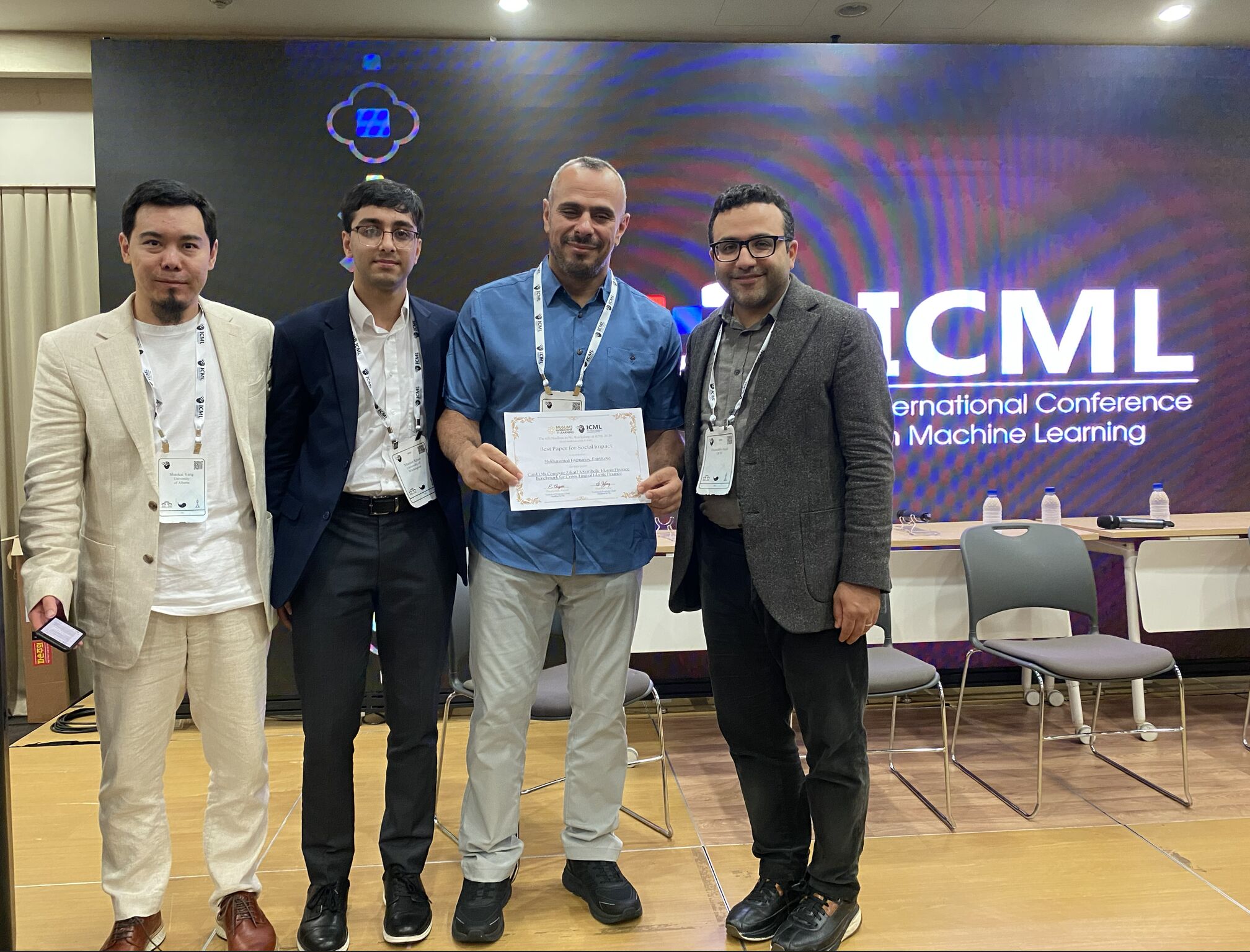
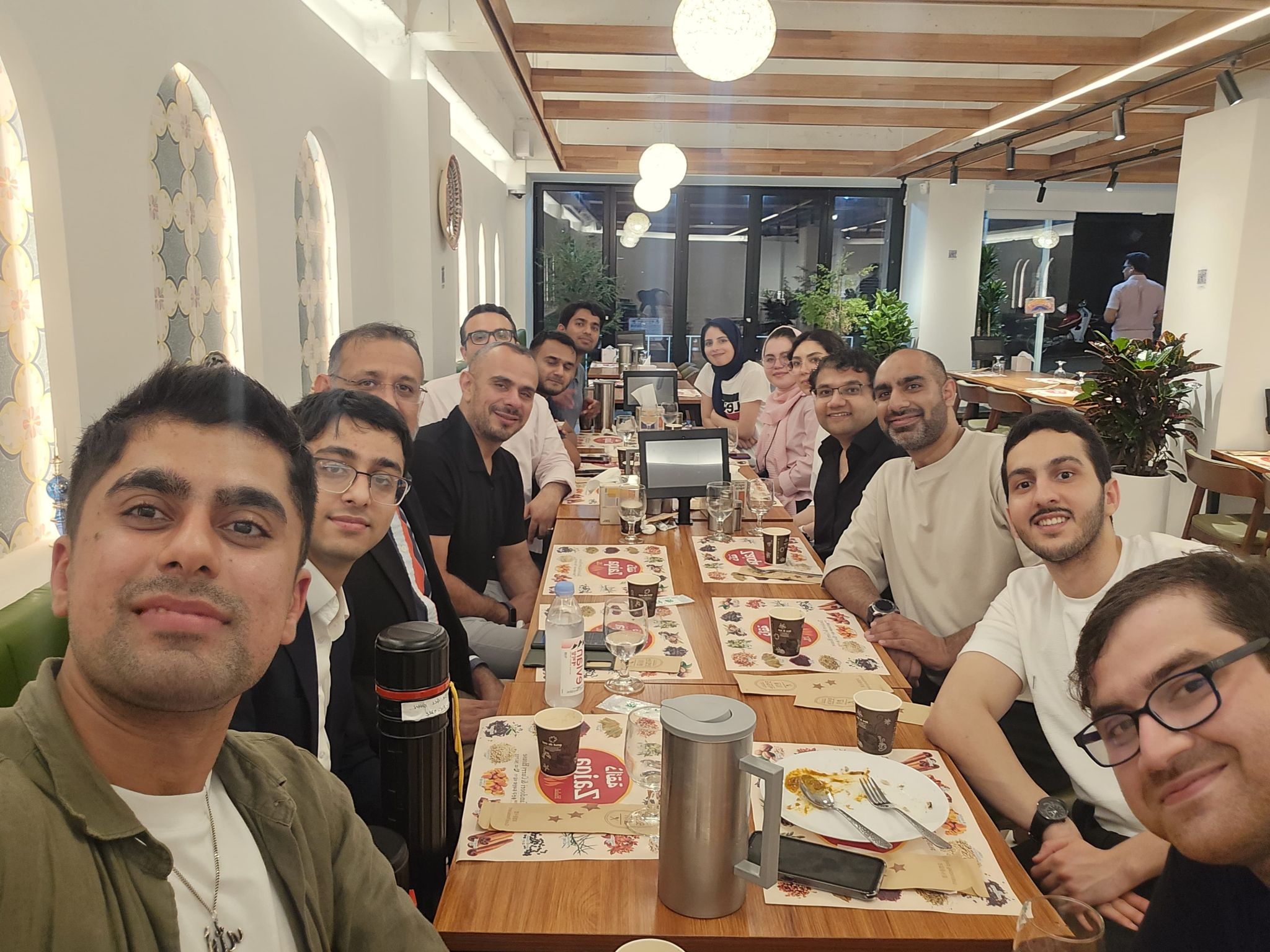
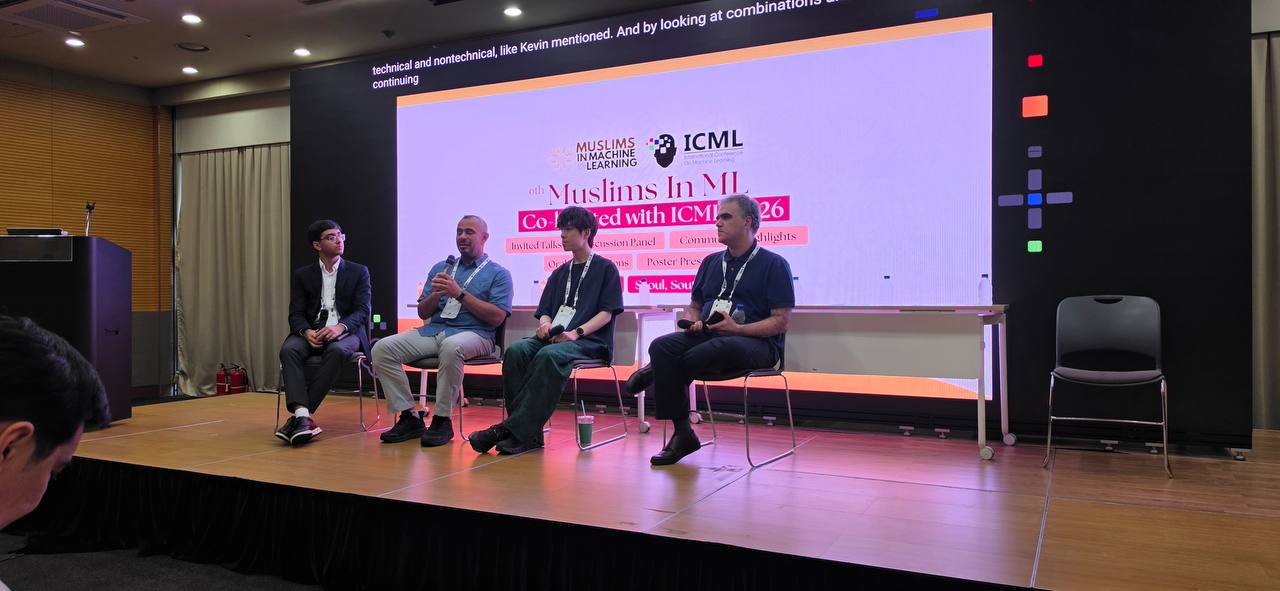
Awards
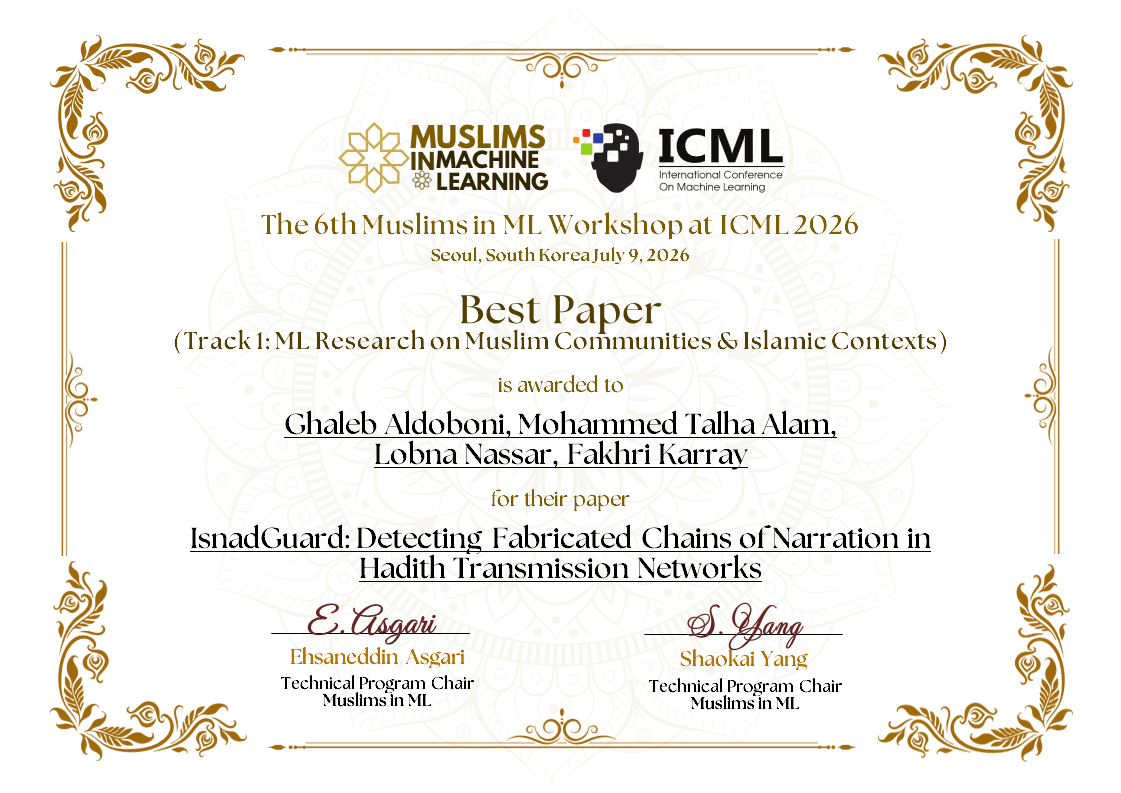
Organizing Team
 Shaokai Yang
University of Alberta
Shaokai Yang
University of Alberta
 Ahmed Youssef
Synopsys
Ahmed Youssef
Synopsys
 Ehsaneddin Asgari
Qatar Computing Research Institute
Ehsaneddin Asgari
Qatar Computing Research Institute
 Yousra Farhani
Niels Bohr Institute
Yousra Farhani
Niels Bohr Institute
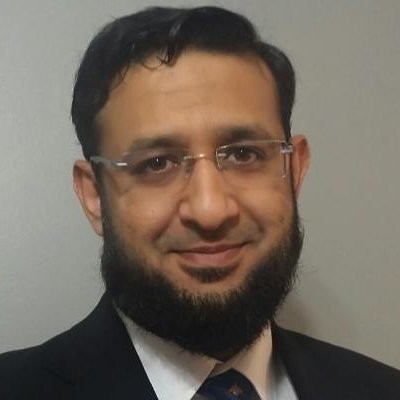 Suleiman Ali Khan
Amazon
Suleiman Ali Khan
Amazon
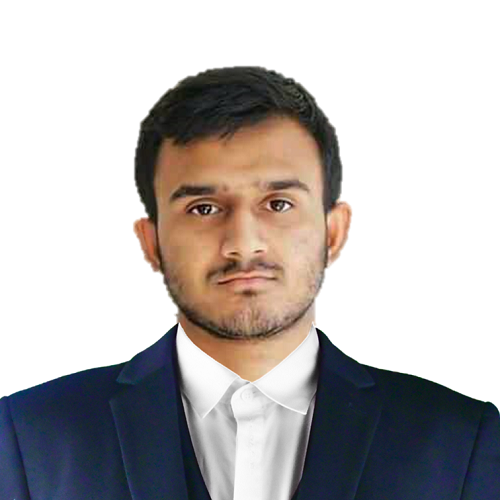 Azmine Toushik Wasi
CIOL
Azmine Toushik Wasi
CIOL
 Gasser Elbanna
Harvard University
Gasser Elbanna
Harvard University
 Nasik Muhammad Nafi
Oak Ridge National Lab
Nasik Muhammad Nafi
Oak Ridge National Lab
 Kamran Soomro
UWE Bristol
Kamran Soomro
UWE Bristol
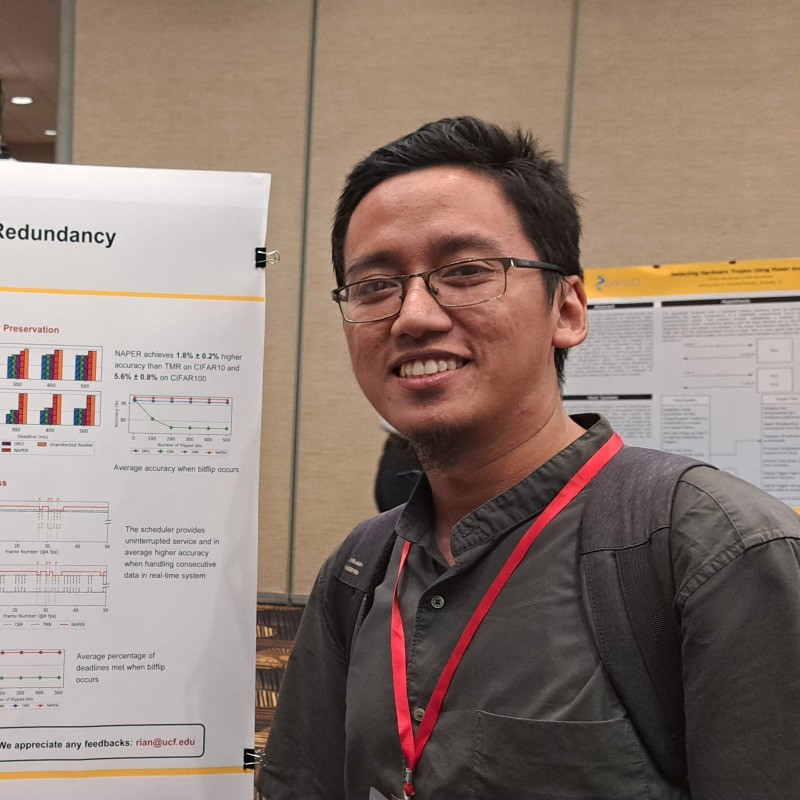 Rian Adam Rajagede
University of Central Florida
Rian Adam Rajagede
University of Central Florida
 Muhammad Irfan Khan
Turku University of Applied Sciences
Muhammad Irfan Khan
Turku University of Applied Sciences
Join Us
We welcome all researchers— irrespective of their religious/ethnic background —to submit their work and contribute to the development and application of ML in Muslims Countries and Muslim Communities globally. For more information, please visit our community page. For any questions, email the organizers at: [email protected]. Also, sign up to [email protected] mailing list by filling out the form to follow updates about our workshop. Also, join Muslims in ML Slack group.
Frequently Asked Questions
Does acceptance to the workshop grant access to the main ICML 2026 conference?
I require a visa to attend. What should I do?
Are travel grants or airfare reimbursements offered?
Can I present remotely if I cannot attend in person?
What are the video submission requirements and deadline?
- Aspect ratio of 16:9 and resolution of at least 720p. 1080p or 4K is encouraged. The file must be in MP4 format.
- Duration of 5 to 8 minutes is ideal; up to 10 minutes is acceptable.
- At the start, clearly state and display the paper title, authors, and affiliations, and state acceptance to the workshop (for example: "This work has been accepted to the 6th Muslims in ML Workshop co-located with ICML 2026").
- Include background and motivation, main contributions, methodology, key findings, and a conclusion.
- Displaying both the presenter and the slides is recommended. The presenter can appear in a small window (for example, the bottom-left corner) while the slides take the main screen.
- Use the Muslims in ML logo and identity to highlight the workshop.
- Do not add any background music.
- Slides and posters are optional and, if provided, will be showcased on the workshop website.
- Upload your video and any optional materials to Google Drive or another platform, with sharing settings that allow everyone at least view access. This is required so the materials can be collected and uploaded to the YouTube channel and website.